
Published,
with the work attached.
Every result Omic reports comes with its sources, its code and what it does not show. Benchmarks, technical reports and case studies, as they are released.
technical report
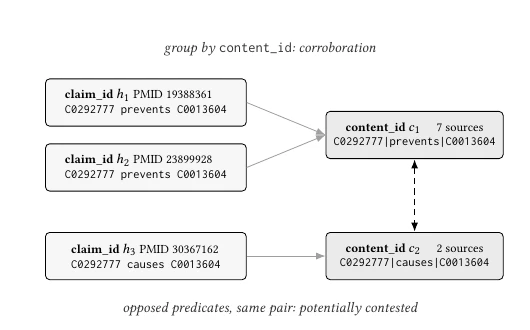
Attest: a claim-native data layer for shared knowledge
Organizations share documents rather than facts, so every reader re-derives what a corpus says. Attest stores one row per source assertion, which makes corroboration a group-by and disagreement a first-class record. Measured on 150 biomedical concept pairs and a 50-paper corpus, with the costs reported.
technical report
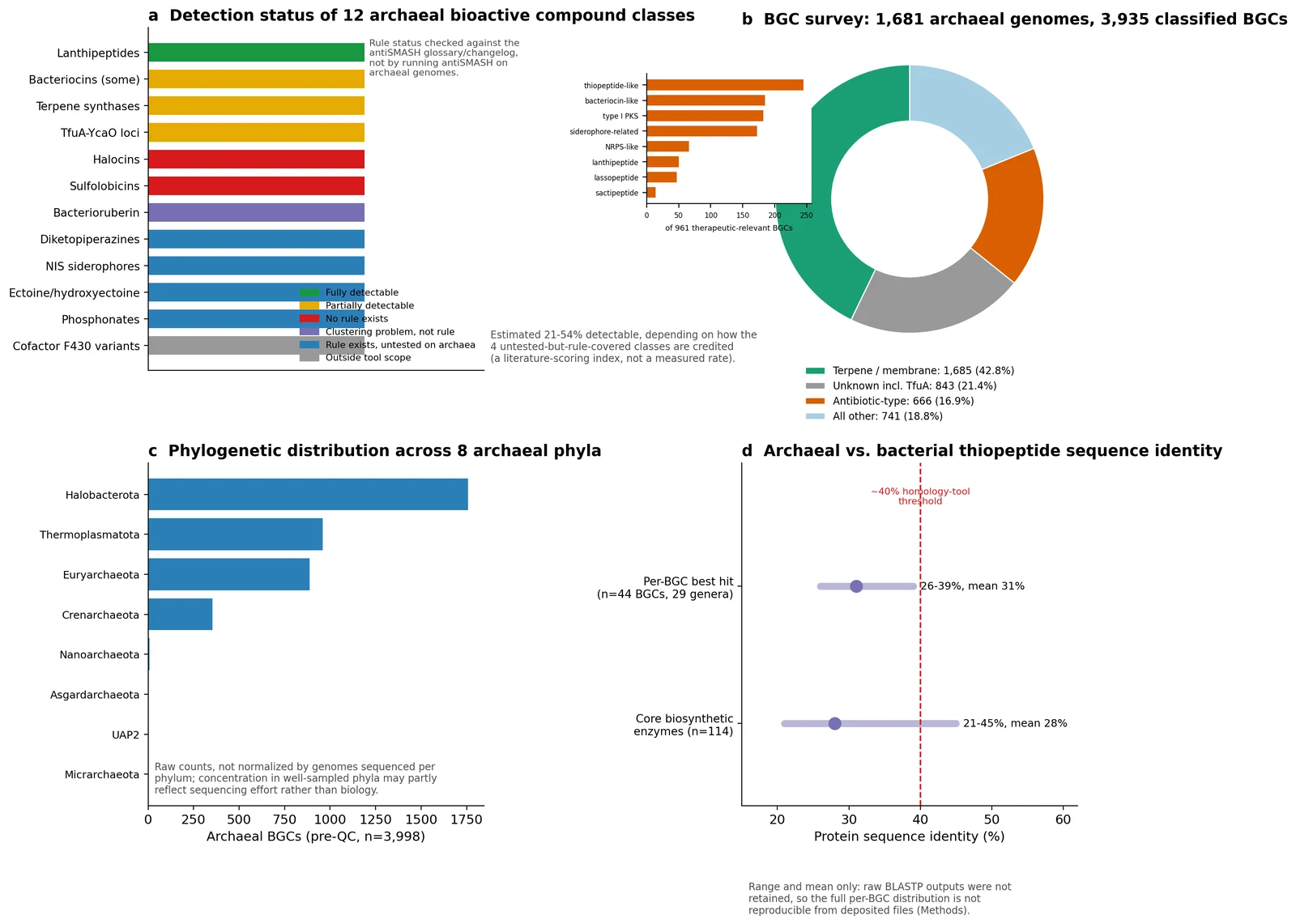
A survey of 3,974 archaeal biosynthetic gene clusters, and a substrate predictor for the fraction tools can see
Archaea are treated as an underexplored source of natural products. We surveyed 1,681 archaeal genomes, catalogued 3,974 clusters, built a substrate predictor for them, and tested the two usual explanations for the detection gap against matched bacterial controls. Neither survived.
technical report
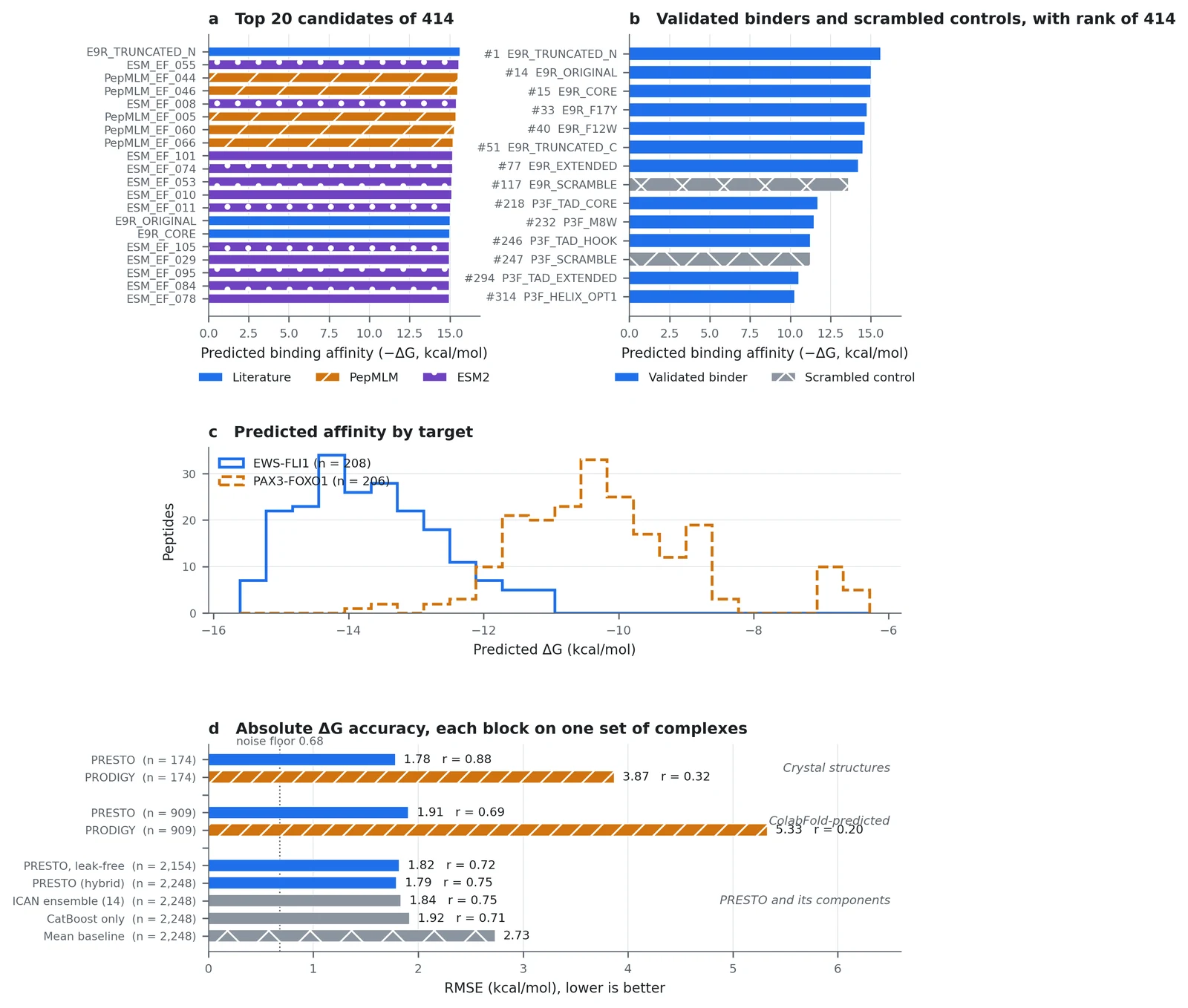
PRESTO: one model for binding affinity, and where it stops working
Affinity prediction, de novo binder ranking and mutational effects are treated as one problem by practitioners and as three by the tools. PRESTO is evaluated on all three, roughly halves the error of the established contact-based predictor, and reports the two tasks where it fails as findings rather than omissions.
technical report
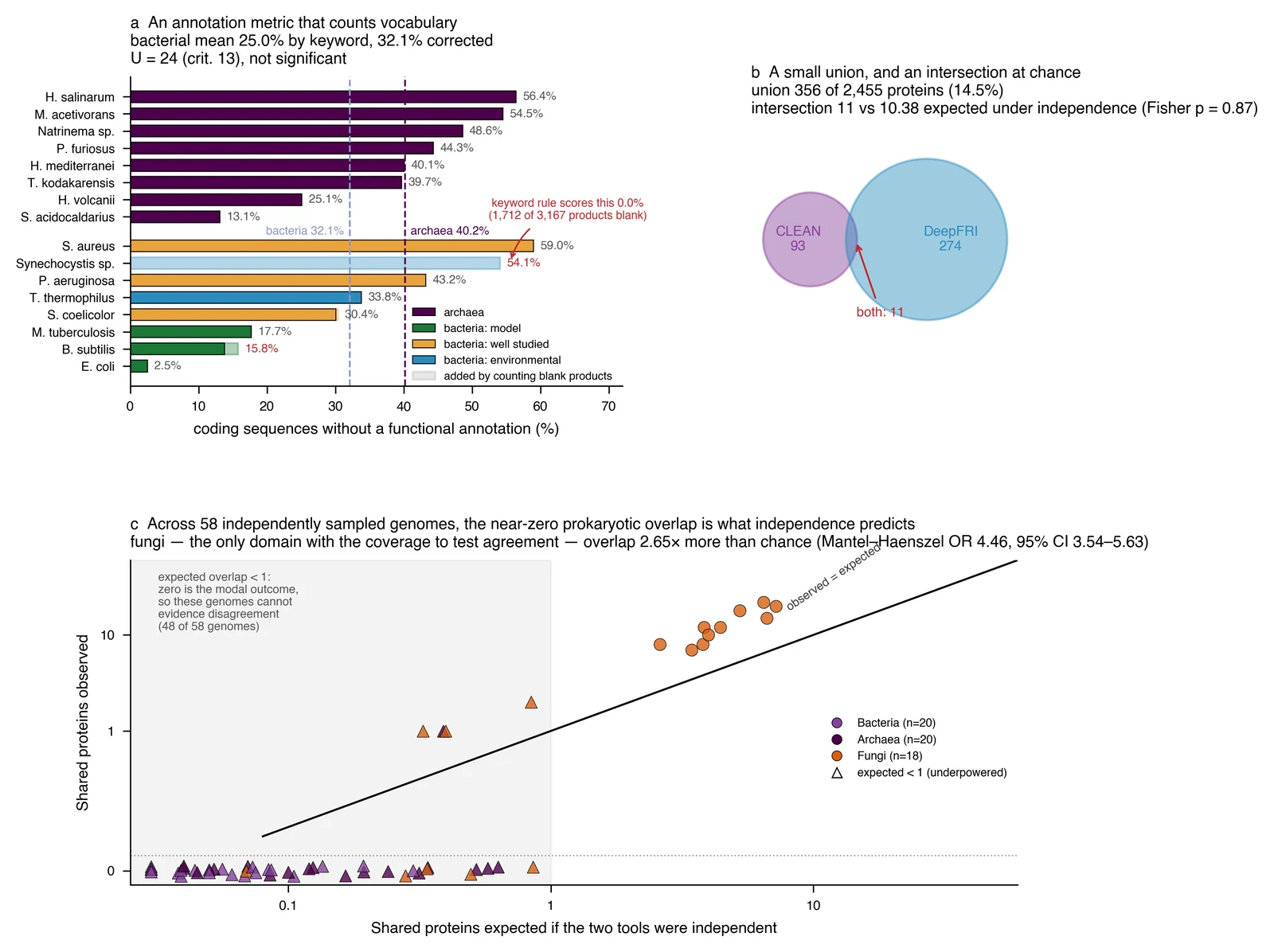
Seven silent failure modes in genome-mining pipelines
We re-derived every number in one of our own working pipelines from the files that produced it. Seven stages were wrong in ways that looked exactly like being right: five were invisible until recomputation, and one had survived an earlier audit of ours that read the same evidence and drew the opposite conclusion.
technical report
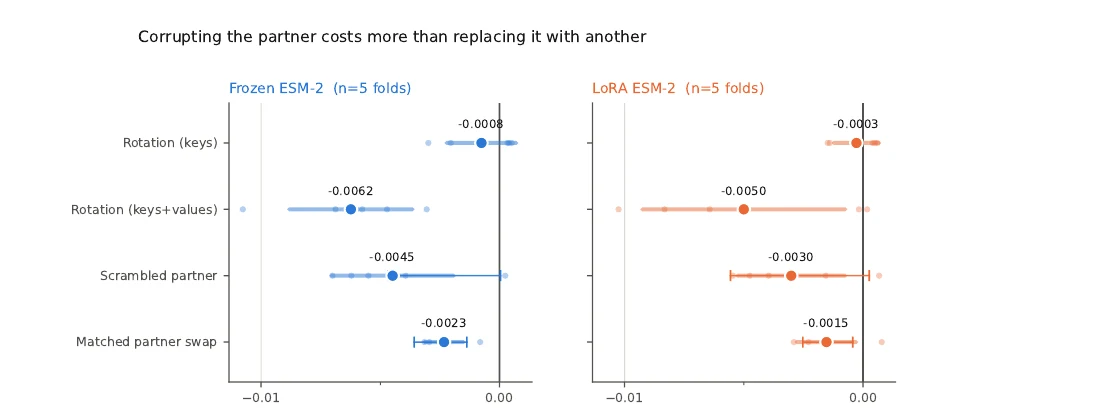
Near-cognate decoys hide partner identity in disordered-region benchmarks
Benchmarks for partner-conditioned prediction of disordered regions share a recipe, and a model is credited with using the partner when it beats a partner-free ablation. We built one to current best practice, 5,683 complexes, then audited every step of the recipe. Four of six steps are wrong in a direction that flatters the benchmark.
case study
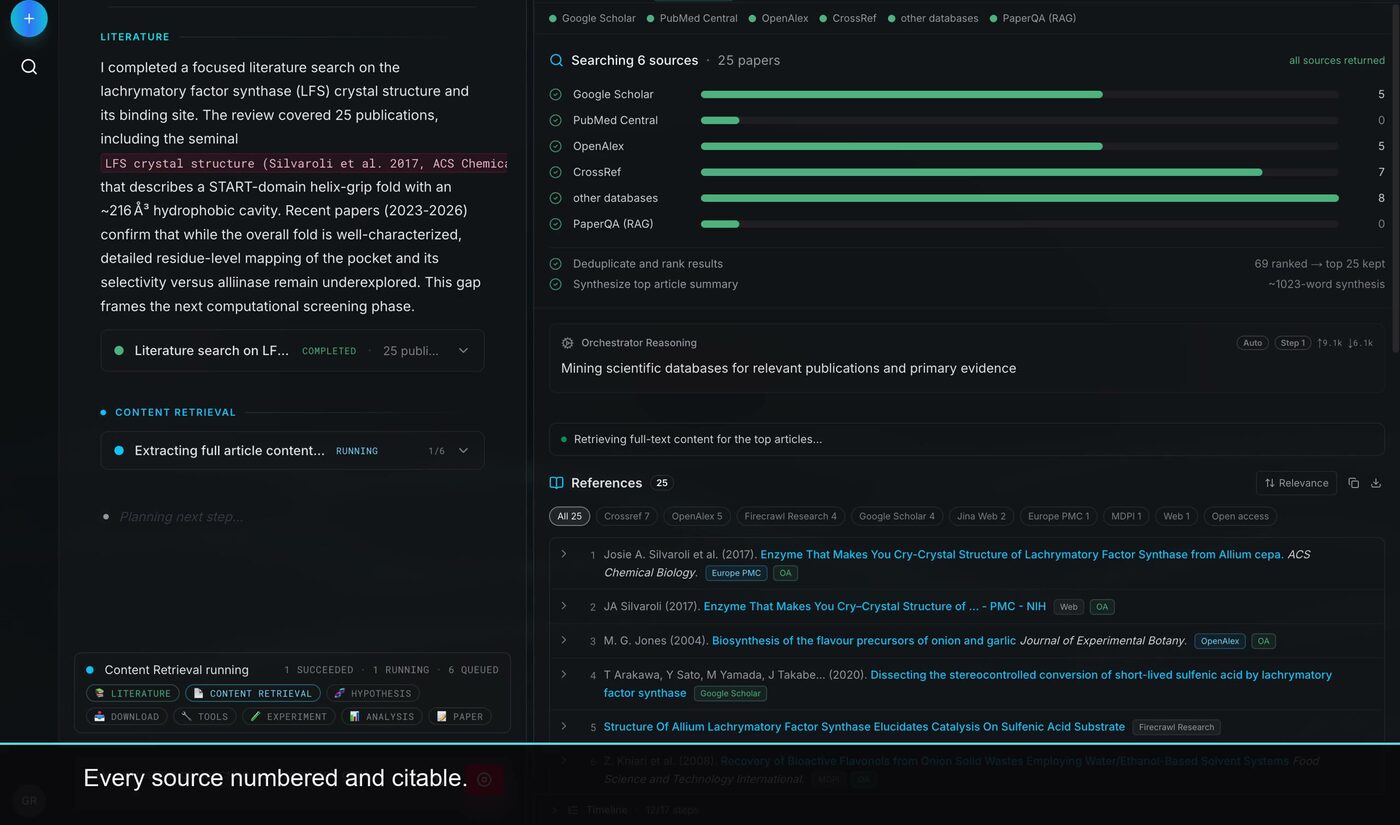
Can you stop onion tears without touching the onion? A recorded Omic investigation
Ten stages, unattended: 391 search results ranked to 25 papers, two real crystal structures pulled from the Protein Data Bank, three food-safe candidate inhibitors, and a manuscript with thirteen references.
case study
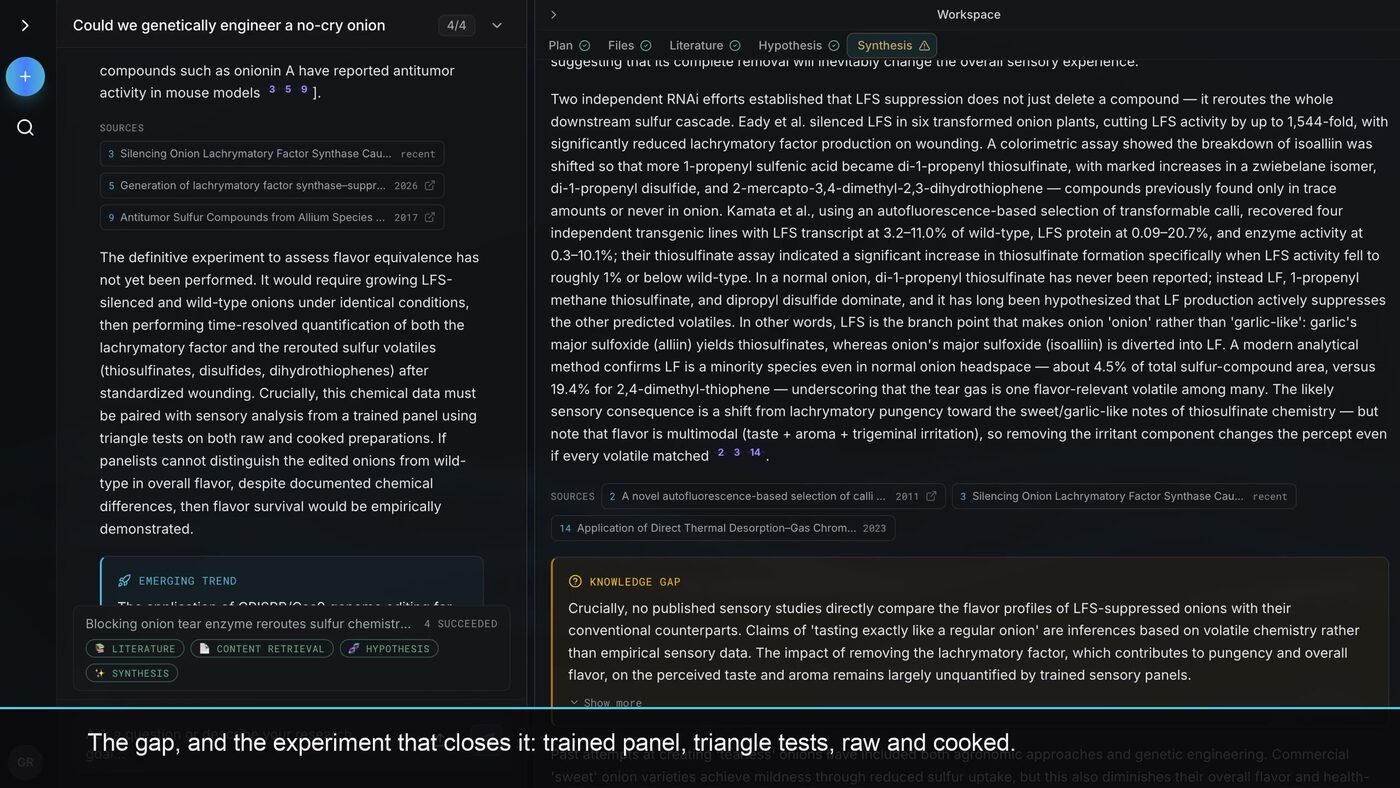
Can you engineer a no-cry onion that tastes the same? An end-to-end Omic investigation
One question, start to finish: 842 candidate papers, 25 kept, three scored hypotheses, and an answer that says what is established and what is not.
preprint
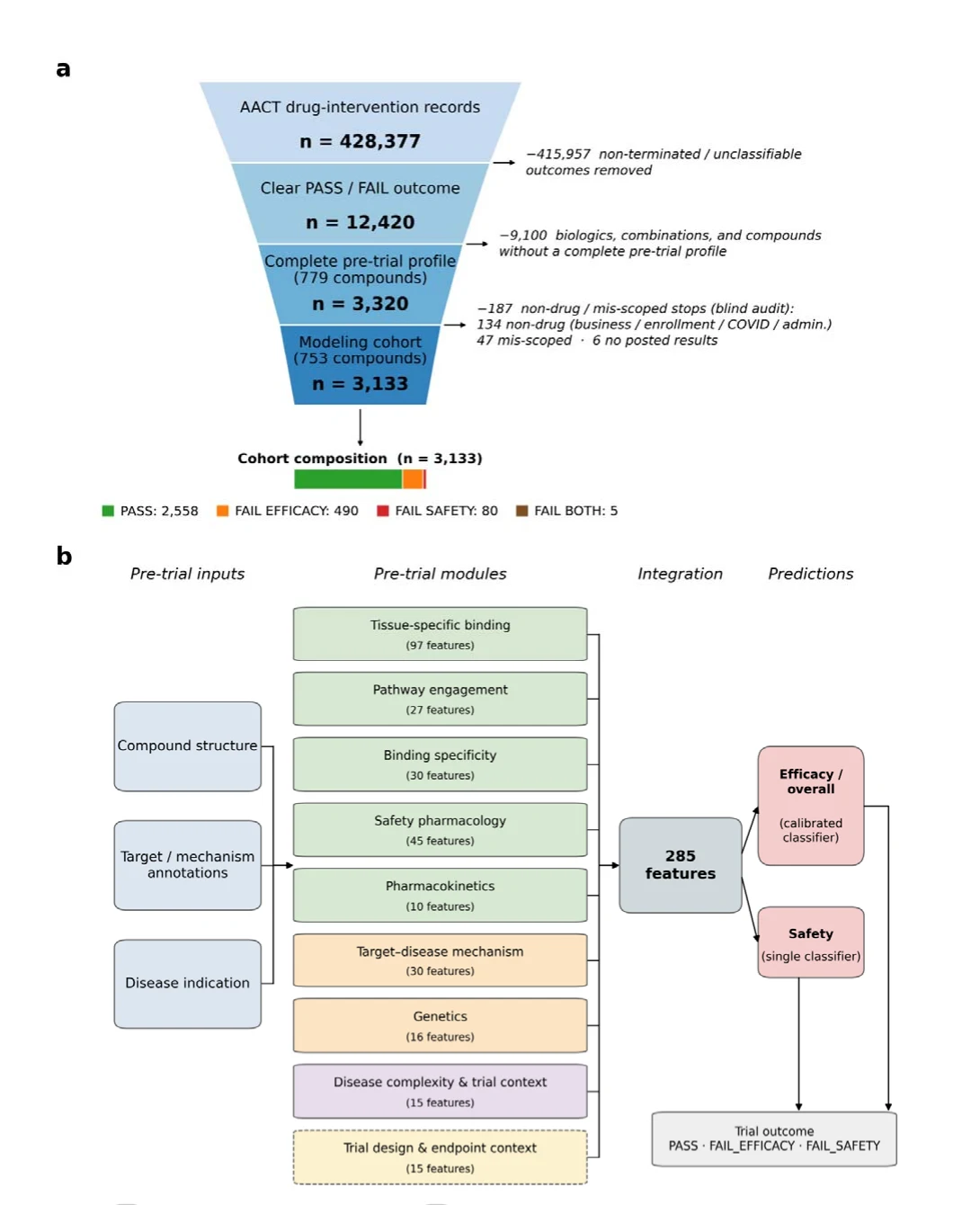
MERIT: predicting trial outcomes from mechanism, not from compound memorization
Most trial-outcome models can recognize the drug in front of them. Score them only on drugs they have never seen and the reported numbers fall. MERIT predicts from biology instead, reaches an honest AUROC of 0.770 across 753 drugs and 3,133 trials, and has 55 locked Phase III predictions on the record.